Nutritional analysis is the scientific process of determining the nutrient composition of food products, including macronutrients (protein, fat, carbohydrates), calories, vitamins, and minerals. In India, the food and nutraceutical industry has been growing at a rapid rate in the past few years. This growth can be attributed to the increasing awareness of consumers regarding health and nutritional issues. To meet the increasing demand for functional food products and dietary supplements, it is imperative that the food products meet nutritional and regulatory requirements. Nutritional analysis has therefore become an essential component of product development and quality assurance.
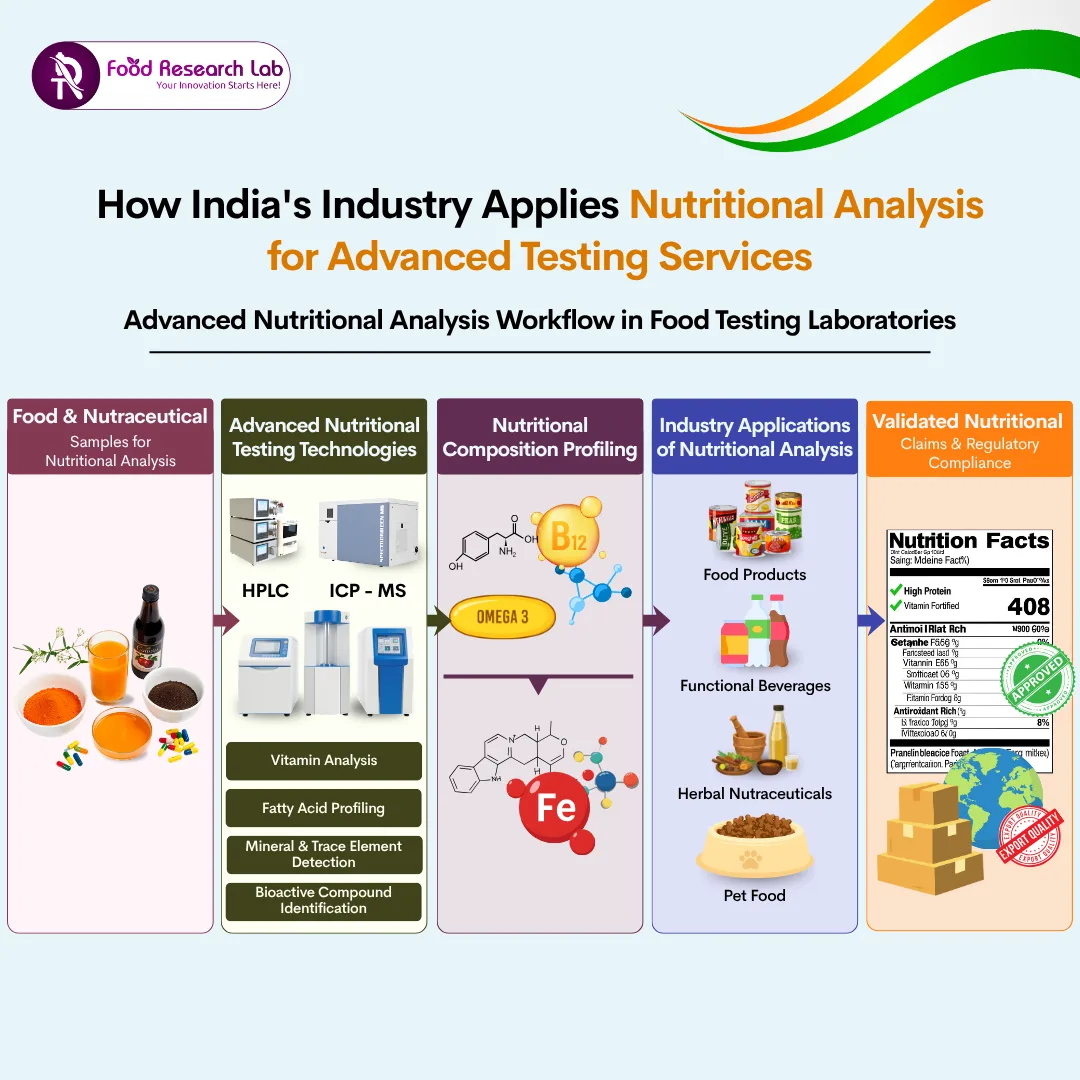
How India's Industry Applies Nutritional Analysis for Advanced Testing Services
Nutritional analysis is the scientific process of determining the nutrient composition of food products, including macronutrients (protein, fat, carbohydrates), calories, vitamins, and minerals. In India, the food and nutraceutical industry has been growing at a rapid rate in the past few years. This growth can be attributed to the increasing awareness of consumers regarding health and nutritional issues. To meet the increasing demand for functional food products and dietary supplements, it is imperative that the food products meet nutritional and regulatory requirements. Nutritional analysis has therefore become an essential component of product development and quality assurance.
Accurate nutritional analysis testing, food manufacturers can easily determine the nutritional composition of their products. It also helps in verifying the nutritional information that is given in food products through standardized nutrition facts labeling. Advanced nutritional analysis plays a vital role in generating scientific data that helps in ensuring product safety, regulatory compliance, and consumer transparency. In India, food products, including food and beverages, nutraceuticals, and pet food, use laboratory-based nutritional analysis techniques and food nutrition testing services to ensure that their products meet domestic requirements as well as international market requirements. [1]
Understanding Nutritional Analysis in Product Development
Definition and Scope
Nutritional analysis can be defined as the scientific method of analyzing the nutritional content of food products, beverages, and dietary supplements. This requires laboratory analysis to measure the macro and micronutrients in a product using standardized food nutritional analysis methods.
In addition to the basic nutritional composition of food products, nutritional analysis also includes the determination of the caloric value, dietary fiber, and bioactive compounds that affect the nutritional functionality of food products. This ensures that food manufacturers can carry out nutritional content analysis, dietary composition evaluation, and nutritional value assessment while ensuring that the information given to consumers is reliable and scientifically validated.
Key Components of Nutritional Analysis
Nutritional analysis typically involves evaluating several important parameters:
- Macronutrient and micronutrient analysis including proteins, fats, and carbohydrates
- Micronutrient analysis such as vitamins and minerals through vitamin and mineral analysis
- Dietary fiber analysis
- Determination of caloric value through calorie and nutrient analysis
- Evaluation of bioactive compounds in functional foods
- Verification of nutritional labeling information through food label nutrition analysis
These components support accurate food nutrient profiling, nutrient content verification, and nutritional quality assessment, helping manufacturers ensure that their products deliver the intended nutritional benefits while maintaining compliance with regulatory standards. [2]
Scientific Foundations of Nutritional Analysis Testing in Modern Food Systems
Nutritional Science and Food Composition Analysis
Nutritional analysis is based on the fundamental principles of nutritional science. Nutritional science involves the study of the composition and nutritional health benefits of nutrients in food products. By determining the levels of macronutrients and micronutrients, manufacturers can evaluate the nutritional value of their products through food composition analysis and ensure that they meet dietary guidelines and consumer expectations.
Food composition analysis can also be used in the research of supplementary food composition, nutritional analysis of fruits, and fruit nutrient composition analysis. This scientific research helps in the development of plant-based food products, herbal food products, and functional food products. This scientific approach enables industries to conduct accurate dietary nutrient analysis and develop foods that deliver optimal nutritional value while maintaining sensory quality and shelf life. [3]
Analytical Chemistry in Nutritional Testing
Analytical chemistry is the scientific basis of nutritional testing. Laboratory testing includes sample preparation, nutrient extraction, and quantitative analysis using scientific instruments in a nutrition testing laboratory.
Standardized analysis techniques guarantee that the analysis of nutrients is precise, consistent, and comparable among laboratories. These scientific techniques allow industries to consistently produce high-quality products through reliable food nutritional analysis, comprehensive nutritional content analysis, and precise nutritional quality assessment. Laboratories can also employ computer applications such as a nutritional analysis calculator to analyze laboratory results and express scientific analysis results in standardized nutritional units for regulatory reporting. [4]
Recent and Advanced Analytical Techniques Used for Nutritional Content Analysis in Testing Services
Modern nutritional testing laboratories employ highly efficient techniques to ensure precise detection and quantification of nutrients in food products. These techniques play a vital role in food nutrient profiling, dietary nutrient analysis in food products, and nutritional value assessment. These techniques also play a vital role in research and development of functional food products, nutraceuticals, and fortified food products.
High Performance Liquid Chromatography (HPLC)
High Performance Liquid Chromatography (HPLC) techniques play a vital role in food nutritional analysis techniques. HPLC techniques help in the separation and quantification of nutrients such as vitamins, amino acids, organic acids, and plant-based bioactive compounds. HPLC techniques also play a vital role in vitamin and mineral analysis and enables accurate determination of water-soluble vitamins such as vitamin C and B-complex vitamins, as well as fat-soluble vitamins including vitamin A and vitamin E. These analyses contribute to reliable nutrient content verification and nutritional quality assessment in functional foods and nutraceutical products.
Gas Chromatography (GC)
Gas Chromatography (GC) is widely employed for the analysis of volatile substances and lipid components in food items. In nutritional analysis, Gas Chromatography is primarily used for fatty acid analysis and lipid component analysis. This technique supports detailed food nutritional analysis, including the identification of essential fatty acids such as omega-3 and omega-6. GC analysis contributes to dietary composition evaluation and accurate calorie and nutrient analysis in oils, dairy products, and nutritional supplements.
Inductively Coupled Plasma Mass Spectrometry (ICP-MS)
Inductively Coupled Plasma Mass Spectrometry (ICP-MS) is a sophisticated analytical method employed for the detection and quantification of minerals and trace elements in food samples. ICP-MS facilitates highly sensitive vitamin and mineral analysis, enabling laboratories to determine essential minerals like calcium, iron, zinc, magnesium, and selenium. This analysis is significantly important for nutritional value assessment and nutrient content verification, especially in fortified foods and infant nutrition products.
Liquid Chromatography–Mass Spectrometry (LC-MS/MS)
LC-MS/MS combines chromatographic separation with mass spectrometry detection, allowing laboratories to analyze complex nutrient metabolites and bioactive compounds. This technique supports advanced food nutrient profiling, dietary nutrient analysis, and identification of phytochemicals and bioactive compounds present in functional foods and nutraceutical products.
Near Infrared Spectroscopy (NIR)
Near Infrared Spectroscopy (NIR) is a quick and non-destructive technique used for nutrient analysis in food products. This technique enables laboratories and manufacturers to carry out quick calorie and nutrient analysis, along with real-time nutritional content analysis of protein, moisture, fats, and carbohydrates levels during food processing.
Metabolomics-Based Nutritional Profiling
Metabolomics-based techniques offer complete food composition analysis by identifying a wide range of nutrients in food systems. This technique helps in the advanced dietary composition evaluation, nutritional quality assessment, and underst
Role of Nutritional Analysis in Product Development and Reformulation
Reformulation of Processed Foods
Nutritional analysis testing is commonly used by food producers to reformulate their existing food products in compliance with changing consumer demands and food regulations. For instance, food producers can minimize the levels of sugar, salt, or unhealthy fats while maximizing the levels of protein or fiber. By conducting thorough food nutrition analysis and dietary nutrient analysis, food producers can determine the impact of changes in food formulations on the nutrition value assessment of their food products while maintaining optimal macronutrient and micronutrient analysis results.
Development of Functional and Fortified Foods
Nutritional analysis is necessary in the development of fortified and food product development for functional foods. In this regard, food producers can incorporate vitamins, minerals, or bioactive compounds to enrich their food products. By availing advanced food nutrition testing services in a certified nutrition testing laboratory, food producers can be sure that the added nutrients will be retained in their food products over their entire shelf life. This also includes supplementary food composition validation.
Scientific Validation of Nutritional Claims
Food manufacturers often make claims such as “high protein” or “vitamin fortified”. These claims require validated nutrient content verification supported by laboratory-based nutritional analysis testing. These tests ensure accurate nutrition facts labeling, reliable food label nutrition analysis, and compliance with regulatory guidelines. [6]
Regulatory and Labeling Applications of Nutritional Analysis in India
FSSAI Regulatory Framework
The regulatory framework in India, in terms of food safety and nutrition facts labeling, is taken care of by the Food Safety and Standards Authority of India (FSSAI). Food manufacturers are required to provide correct nutritional information on packaged food products, such as energy, protein, carbohydrates, fat, and other key nutrients. Such labeling is backed by scientifically valid nutritional analysis testing and laboratory-based nutritional content analysis performed by accredited nutrition testing laboratories.
Nutritional Label Validation
Nutritional analysis supports regulatory compliance by ensuring that nutrient values declared on product labels are scientifically validated. Testing procedures include calorie and nutrient analysis, vitamin and mineral analysis, and detailed food nutrient profiling, all of which contribute to reliable nutrient content verification and improved nutritional quality assessment.
Compliance for Export Markets
Manufacturers need to comply with international regulatory requirements for exporting products. Thus, food nutritional analysis methods and standardized dietary composition analysis assist food manufacturers in adhering to both domestic and international nutritional labeling regulations. Such analyses may also involve nutritional analysis of fruits and fruit nutrient composition analysis in cases where plant-based or fruit-based ingredients are used in exported food products. [7]
Industry Applications of Advanced Nutritional Value Assessment in Testing Services
Industry Sector | Analytical Methodology Used | Compounds / Nutrients Identified | Supported Product Claims |
Food Industry | HPLC for vitamin analysis, GC for fatty acid profiling, Kjeldahl method for protein determination | Vitamins (A, B-complex, C), fatty acids, proteins, carbohydrates, dietary fiber | High protein, source of fiber, vitamin fortified |
Beverage Industry | HPLC for vitamin and antioxidant profiling, NIR for rapid nutrient screening | Vitamin C, polyphenols, antioxidants, sugars, organic acids | Rich in antioxidants, vitamin C enriched, low sugar beverage |
Herbal Products Industry | LC-MS/MS for phytochemical profiling, HPLC for plant bioactives | Polyphenols, flavonoids, alkaloids, plant-derived bioactive compounds | Herbal antioxidant formula, natural plant extract-based product |
Nutraceutical & Dietary Supplement Industry | HPLC and LC-MS/MS for bioactive compound analysis, ICP-MS for mineral profiling | Vitamins, minerals, amino acids, polyphenols, herbal actives | Vitamin enriched supplement, mineral fortified, immune support formula |
Pet Food & Animal Nutrition Industry | Kjeldahl method for protein analysis, GC for fatty acid profiling, ICP-MS for mineral analysis | Proteins, essential fatty acids, calcium, iron, zinc, trace minerals | High protein pet food, balanced nutrition formula, mineral fortified feed |
Industry Insight: Nutritional Analysis for Ayurvedic Functional Beverage Development
A leading Indian functional food brand approached Food Research Lab to conduct nutritional analysis for a fortified Ayurvedic herbal beverage formulated with ingredients such as ashwagandha extract, amla concentrate, and tulsi extract. The product was designed to support immunity and antioxidant benefits.
Client Requirement
The client required scientific validation of the product’s nutritional composition to support regulatory compliance and label claims. Key requirements included:
- Nutritional profiling of herbal ingredients and formulation
- Quantification of vitamins, minerals, and antioxidant compounds
- Verification of nutrient stability during processing and storage
- Analytical data to support nutritional labeling and product claims
Challenges Faced During Analysis
FRL encountered several technical challenges during testing:
- Complex herbal matrix: Multiple bioactive compounds interfered with nutrient detection.
- Raw material variability: Natural ingredients showed variation in vitamin and polyphenol levels.
- Nutrient degradation: Certain vitamins were sensitive to heat and oxidation during processing.
FRL’s Analytical Approach
FRL implemented a structured nutritional testing strategy:
- Raw material profiling using HPLC and LC-MS/MS for vitamin and bioactive analysis
- Mineral analysis using ICP-MS
- Antioxidant activity evaluation through laboratory assays
- Stability testing to assess nutrient retention during storage
Outcome
FRL generated accurate nutritional composition data for the Ayurvedic beverage. The validated results supported regulatory compliance, nutritional labeling, and product positioning, enabling successful product launch in domestic and export markets.
Conclusion
Nutritional analysis is critical in ensuring product quality, accurate labeling, and regulatory compliance in the food and nutraceutical industry in India. Advanced food nutritional analysis services help in validating food composition and nutritional data, thus providing credible nutritional information for food and nutraceutical products in the country. The demand for nutritional and nutraceutical-based food products is expected to increase in the future, and advanced nutritional analysis services are likely to drive product innovation and market trust.
Partner with Food Research Lab for advanced food nutritional analysis, vitamin and mineral analysis, and comprehensive food product development services for compliant and high-quality product development.
References
- Vijayakumar, A., Dubasi, H. B., Awasthi, A., & Jaacks, L. M. (2024). Development of an Indian food composition database. Current Developments in Nutrition, 8(7), 103790. https://doi.org/10.1016/j.cdnut.2024.103790
- El-Sayed, A. K. (2022). Nutritional analysis as a tool for assessing food quality and health value. Journal of Food Science and Nutrition Research. https://www.tsijournals.com/articles/nutritional-analysis-as-a-tool-for-assessing-food-quality-and-health-value-16859.html
- Abhinav, H., Roshan, A. V. B., Prajesh, S., & Punitha, D. (2024). A complete food project for identifying food and nutritional tracker. International Journal of Creative Research Thoughts, 12(5). https://ijcrt.org/papers/IJCRT2405495.pdf
- Md Noh, M. F., Gunasegavan, R. D.-N., Mustafa Khalid, N., Balasubramaniam, V., Mustar, S., & Abd Rashed, A. (2020). Recent techniques in nutrient analysis for food composition database. Molecules, 25(19), 4567. https://doi.org/10.3390/molecules25194567
- Mondal, D. D., Chakraborty, U., Bera, M., Ghosh, S., & Kar, D. (2023). An overview of nutritional profiling in foods: Bioanalytical techniques and useful protocols. Frontiers in Nutrition, 10, 1124409. https://doi.org/10.3389/fnut.2023.1124409
- Chaudhary, V., & Sharma, D. (2025). Classification and analysis of nutrition and health claims on Indian packaged food products. CyTA – Journal of Food, 23(1). https://doi.org/10.1080/19476337.2025.2520543
- Soni, P., & Kaur, K. (2020). Nutrition information on packaged foods marketed in India: Disclosure adequacy, relevance, use and health implications. Ramanujan International Journal of Business and Research, 5, 55–69. https://doi.org/10.51245/rijbr.v5i1.2020.216

Let’s create something Innovative and Delicious together
Food Research Lab strives for excellence in new Food, Beverage and Nutraceutical Product Research and Development by offering cutting edge scientific analysis and expertise.