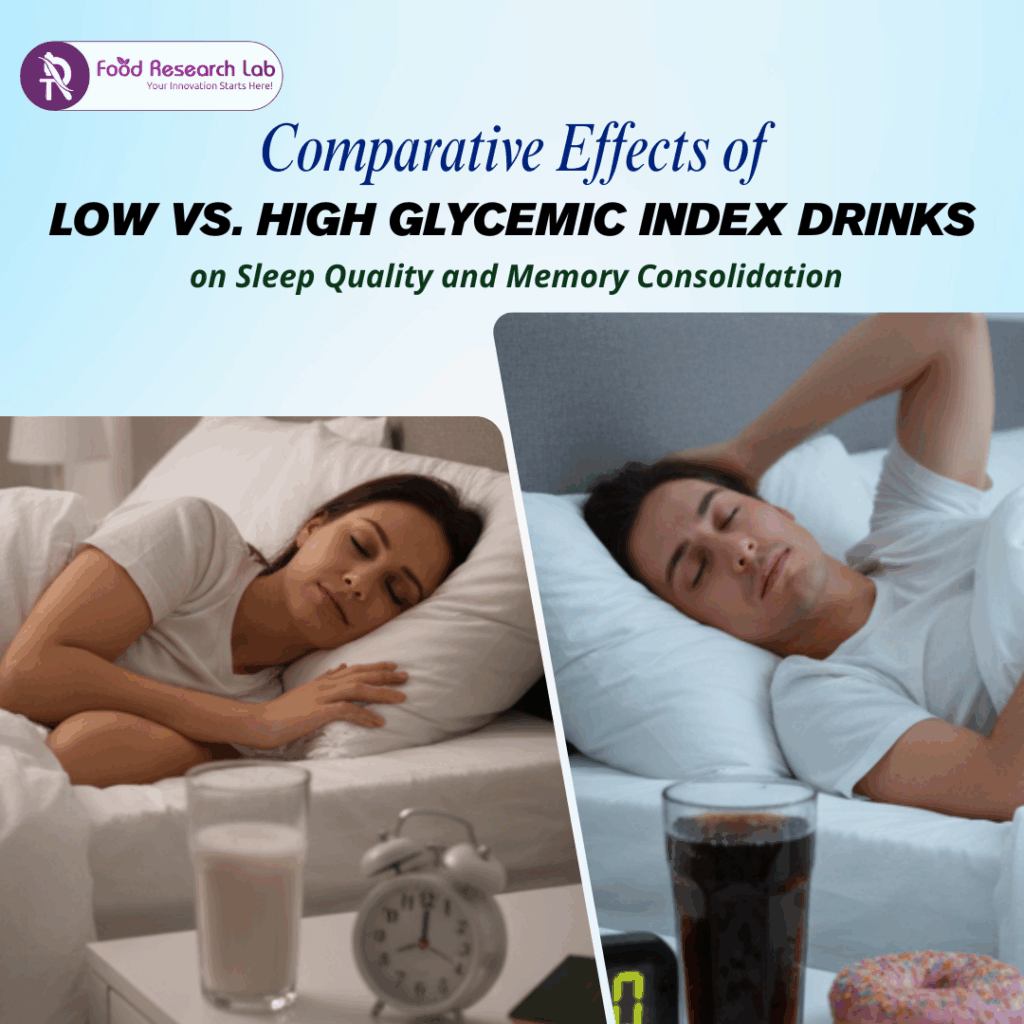
Sleep plays a vital role in cognitive processes such as memory retention and carbohydrate metabolism. The quality of carbohydrate intake is a core consideration in nutraceutical product development since it modulates sleep stages and cognitive outcomes. It is stated that low GI drinks led to increased deep sleep (N3 stage) and better episodic memory retention compared to high GI drinks. This slow glucose release overnight can enhance sleep dependent cognitive processes. [1]
What is high and low GI foods
Glycemic Index (GI) – It is a ranking system (0-100) for carbohydrates containing food that measures how quickly a food raises blood glucose levels after consumption with pure glucose set at 100. Understanding GI is essential for health-conscious product development, especially for sleep and metabolic health supplements.
Feature |
High GI |
Low GI |
GI Value | 70 and above | 55 and above |
Blood sugar response | Rapid spike | Slow and gradual |
Insulin Response | Quick, large insulin release | Gradual insulin release |
Energy Release | Fast | Sustained |
Instance | White bread, white rice, sugary drinks | Oats, lentils, barley, fruits |
Impact on health | Weight gain, Insulin resistance | Satiety, Weight management |
High GI food results in rapid sugar spike whereas Low GI food results in controlled release of sugar in blood
During sleep—particularly in deep NREM stages—the body undergoes several restorative changes important for nutraceutical formulation & development:
Reduced heart rate and blood pressure: When in non-REM (NREM) sleep, and particularly in the deeper NREM stages, your heart rate slows down and blood pressure decreases. By doing this, your body can relax.
Breathing pattern: During NREM sleep, your breathing slows down and becomes very regular. In REM sleep, the breathing patterns become very irregular and may speed up or slow down.
Body temperature decreases: Your body cools down a little to assist you when falling asleep and while asleep, sending a signal to your body that it is time to sleep.
Blood flow is redirected: Rather than being focused in muscular and dermal systems, the blood flow is directed more toward organs that are considered vital (brain and digestive system) to support recuperation and processing.
Hormonal Regulation: For example, growth hormone (GH) which is important for tissues to repair and grow, is primarily released during the deep sleep stage. Another hormone called Melatonin regulates your sleep timing by signaling when you should be feeling tired relative to your circadian rhythm wakes, also helps regulate sleep.
Muscle tone: As your sleep deepens, muscle tone relaxes increasingly until you reach a level of paralysis (mostly in REM sleep) so you typically do not act out or move body, apart from the muscles that allow your eyes or breathing to move.
Nervous system: During NREM sleep, your autonomic nervous system (ANS) shifts into parasympathetic state, which means resting, digesting, and recuperating as opposed to a state of being “alert.” [3] [4] [5]
In this study (Chantelle M. Gaylor et al.,), 20 healthy males participated in a randomized, double-blind trial where they had a standardized evening meal followed by low GI drink with 50g isomaltulose and High GI drink with 50g glucose.
Four hours later their sleep was assessed using polysomnography to measure sleep stages and memory was tested using finger tapping and story recall tasks before and after sleep.
Key results showed that Low GI drink led to more deep sleep (N3 stage) and better retention of neural story memory compared to High GI drink. Low GI drinks provided a slower and steadier glucose release during the first half of sleep, helping maintain a stable blood sugar overnight.
For those engaged in nutraceutical formulation & development, these findings suggest that consuming Low GI foods before bedtime may improve the duration of restorative deep sleep and enhance memory consolidation compared to High GI foods. The more balanced glucose supply overnight is likely to support better sleep quality and cognitive function.
The “Diet Composition and Objectively Assessed Sleep Quality” review (20 human studies) revealed that:
Nutraceutical product development and nutraceutical product innovation should take these macronutrient effects into account when designing products for sleep and cognitive benefits. [7]
Adequate carbohydrate intake plays a vital role in regulating blood sugar release, promoting circadian rhythm. Carbohydrate simulates insulin release which helps to shuttle amino acids into muscle while allowing tryptophan, a precursor to serotonin and melatonin to cross blood brain barrier. This synthesis of melatonin hormone supports sleep wake cycle. Furthermore, stable blood glucose levels prevent nocturnal hypoglycemia that trigger stress hormone release causing sleep interruptions. Therefore, consuming complex, Low GI foods promote good sleep. Hence balanced intake not only supports stable glycemia but also enhances melatonin production leading to restorative rest.
Partner with Food Research Lab to develop innovative low GI formulations backed by extensive research and scientific validation. Reach out to create smarter, low glycemic solutions for modern consumers.
Food Research Lab strives for excellence in new Food, Beverage and Nutraceutical Product Research and Development by offering cutting edge scientific analysis and expertise.